

Uncontested Divorce Lawyer In Illinois
If you and your spouse agree on how to end your marriage, working with an uncontested divorce lawyer in Illinois may help you complete the process more efficiently. In an uncontested divorce, both spouses agree on key issues such as property division, parenting arrangements, and support. When agreement already exists, the court process often becomes simpler and shorter than a contested divorce.
If you live in Oakbrook Terrace or elsewhere in Illinois, the court still requires proper filings and clear settlement terms. Illinois law requires written agreements, accurate paperwork, and court approval before a divorce becomes final. Guidance from an uncontested divorce attorney may help you understand these steps and move through the process with greater clarity.


Many couples already know how they want to resolve their divorce. The goal is to help them put those agreements into a format the court accepts so they can move forward.
If you are considering an uncontested divorce in Illinois and want to understand your options, call Erlich Law Office at 630-538-5331 to schedule a consultation.
Understanding Uncontested Divorce In Illinois
An uncontested divorce happens when both spouses agree on all major issues related to ending their marriage. Because there are no disputes for the court to resolve, the case often moves through the legal system more efficiently.
Illinois courts still require formal procedures, even when spouses cooperate. The judge must review the divorce agreement and confirm that it meets legal requirements. Documents must be filed properly, and certain information must appear in the final judgment.
An uncontested divorce lawyer in Illinois can help you prepare those documents and understand what the court expects before granting a divorce.
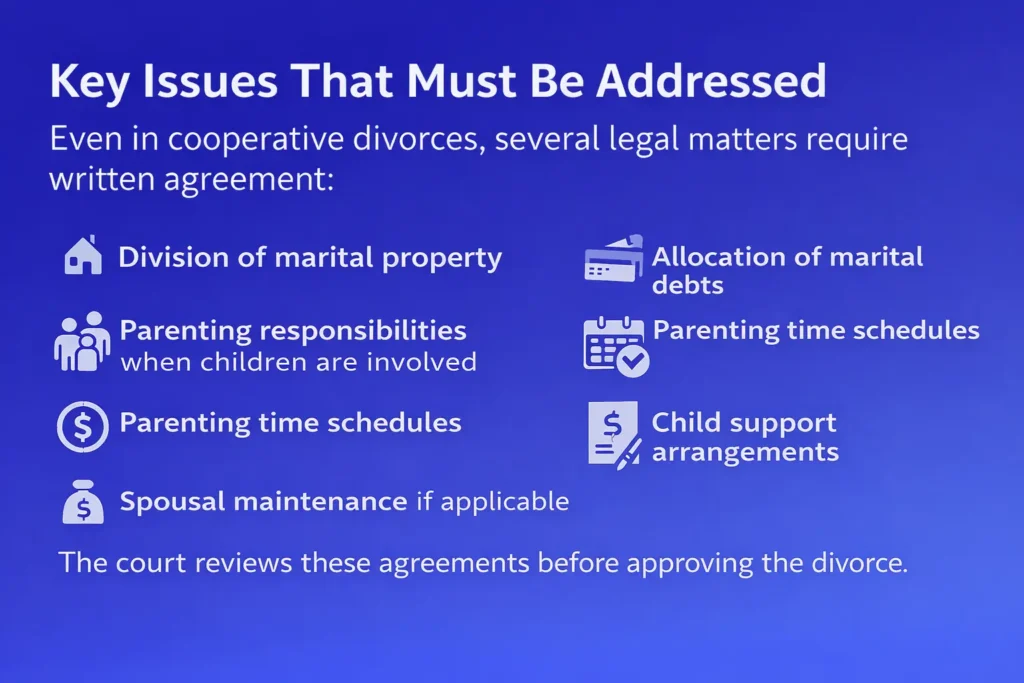
Key Issues That Must Be Addressed
Even in cooperative divorces, several legal matters require written agreement:
- Division of marital property
- Allocation of marital debts
- Parenting responsibilities when children are involved
- Parenting time schedules
- Child support arrangements
- Spousal maintenance if applicable
The court reviews these agreements before approving the divorce.
When An Uncontested Divorce May Be Appropriate
Not every divorce qualifies as uncontested. This option works best when both spouses are willing to cooperate and communicate respectfully.
You may be able to pursue an uncontested divorce if:
- You and your spouse agree that the marriage should end
- Both of you have discussed how to divide property and debts
- Parents agree on parenting schedules and decision-making authority
- Neither spouse plans to dispute the settlement terms
When these conditions exist, the legal process may move more smoothly.
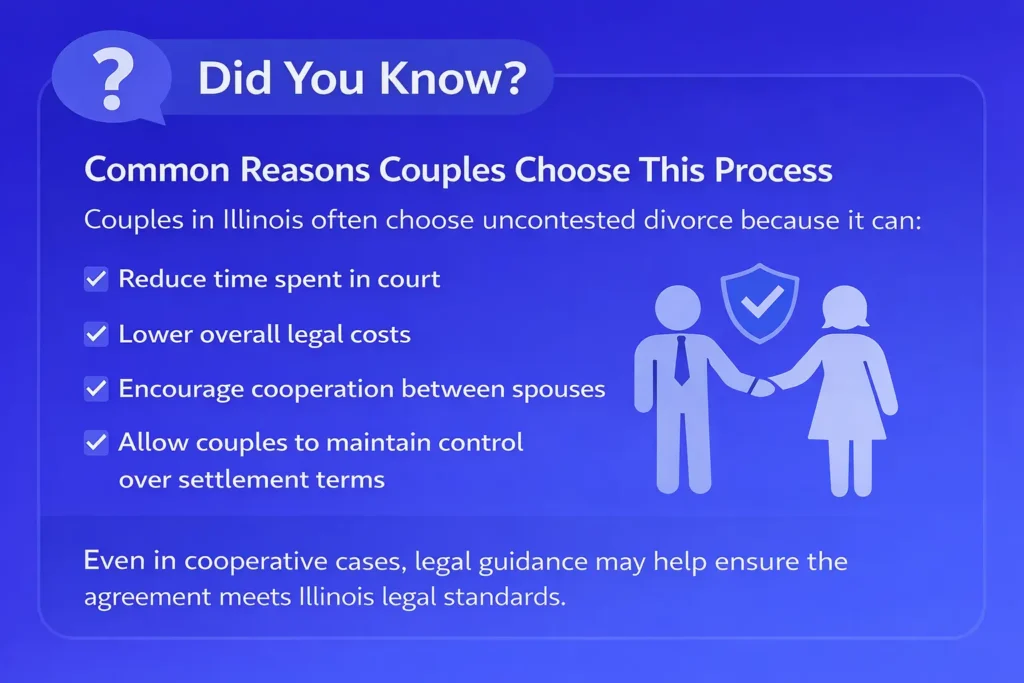
Common Reasons Couples Choose This Process
Couples in Illinois often choose uncontested divorce because it can:
- Reduce time spent in court
- Lower overall legal costs
- Encourage cooperation between spouses
- Allow couples to maintain control over settlement terms
Even in cooperative cases, legal guidance may help ensure the agreement meets Illinois legal standards.
Steps In The Illinois Uncontested Divorce Process
The uncontested divorce process follows several required steps under Illinois law. Even when both spouses agree on the terms of the divorce, the court still requires specific paperwork and procedures before a marriage can legally end. Understanding how these steps work can help you prepare for what lies ahead.
Initial Consultation
The process often begins with a meeting with a lawyer to review your situation. During this conversation, you explain your circumstances, the agreements you and your spouse have already reached, and whether any issues remain unresolved. The attorney may evaluate whether your case qualifies as an uncontested divorce under Illinois law and explain the steps that follow.
Preparation Of Divorce Petition
Once it is clear that the divorce may proceed uncontested, the next step involves preparing the legal paperwork. This typically includes the Petition for Dissolution of Marriage and any additional forms required by the court. These documents outline basic information about the marriage and formally request that the court grant the divorce.
Settlement Agreement Drafting
Both spouses review and sign a written marital settlement agreement. This document explains how property and debts will be divided and addresses parenting responsibilities, parenting time, and support if children are involved.
Filing With The Court
The completed documents are filed with the appropriate Illinois court, usually in the county where one spouse lives. Filing officially opens the divorce case and places it on the court’s schedule for review. After filing, the court processes the paperwork and determines whether any additional documents or a hearing will be required before the divorce can be finalized.
Court Review And Final Judgment
A judge reviews the documents and may schedule a short hearing before issuing the final divorce order. During the hearing, the judge may confirm that both spouses understand and agree to the terms outlined in the settlement. Once approved, the divorce becomes legally final and the court enters the judgment dissolving the marriage.
What To Do Next
If your situation qualifies for an uncontested divorce, these steps can help you prepare:
- List the agreements already reached between you and your spouse
- Gather financial information such as income and debts
- Write down questions about the divorce process in Illinois
- Review parenting schedules if children are involved
- Schedule a consultation with a divorce attorney
Preparing this information early often helps the process move forward more smoothly.
Illinois Residency Requirements For Divorce
Illinois law requires that at least one spouse meet the state residency requirement before filing for divorce.
Typically, one spouse must have lived in Illinois for a specific period before filing the petition for dissolution of marriage. The case is usually filed in the county where one spouse resides.
For residents of Oakbrook Terrace and nearby communities, divorce cases are commonly filed in DuPage County courts.
Local procedures may differ slightly depending on the county. Understanding these procedures may help avoid unnecessary delays.
Parenting Responsibilities In Illinois Divorce
When children are involved, Illinois courts require a child custody and visitation plan that explains how responsibilities will be shared.
Parenting plans usually address:
- Decision-making authority regarding education, health care, and activities
- Weekly parenting time schedules
- Holiday and vacation schedules
- Communication guidelines between parents and children
- Financial support obligations
The judge reviews this agreement to confirm that it meets Illinois legal standards before approving the divorce.
Property Division In Illinois
Illinois follows an equitable distribution approach for dividing marital property. This means the court aims for a fair distribution based on the circumstances of the marriage.
In uncontested divorces, spouses decide how to divide property themselves. The court then reviews the agreement to confirm that it complies with Illinois law.
Property division agreements may include:
- Real estate
- Vehicles
- Bank accounts
- Retirement accounts
- Business interests
- Debts and loans
Clear documentation of these agreements helps prevent disputes after the divorce.
How Long An Uncontested Divorce May Take
The timeline for an uncontested divorce depends on several factors.
Court schedules, paperwork accuracy, and cooperation between spouses can affect how long the process lasts. When both parties cooperate and the paperwork is prepared correctly, uncontested divorces often move faster than contested cases.
Delays may occur if documents contain errors or if required information is missing. Preparing accurate paperwork from the start may help reduce these delays.
Residents of Oakbrook Terrace and nearby communities often ask how long their case will take. The exact timeline depends on the court’s schedule and the details of the case.
Frequently Asked Questions About Uncontested Divorce In Illinois
Divorce raises many questions. The answers below address some common concerns about uncontested divorce in Illinois.
Can Both Spouses Use The Same Lawyer?
In many uncontested divorces, one attorney prepares the paperwork while both spouses review and sign the agreement. The attorney typically represents one spouse, though the other spouse may still review the documents. Some individuals choose to consult separate lawyers for additional guidance before signing the settlement.
Do We Have To Go To Court For An Uncontested Divorce?
Some uncontested divorces require a brief court appearance so the judge can review the agreement and issue the final divorce judgment. The hearing is usually short because both spouses already agree on the terms. In certain situations, courts may finalize the divorce without a lengthy hearing.
What If A Disagreement Happens Later?
If spouses cannot agree on one or more issues, the case may shift from uncontested to contested. Couples sometimes resolve disagreements through negotiation or mediation and return to the uncontested process afterward.
Can We Get An Uncontested Divorce If We Have Children?
Yes. Parents may still pursue an uncontested divorce if they agree on parenting responsibilities, parenting time, and child support arrangements. The court reviews the parenting plan to confirm that it meets Illinois legal standards before approving the divorce.
Contact Our Uncontested Divorce Lawyer in Illinois Today
630-538-5331 to get started with a consultation, and learn more about the uncontested divorce process in Illinois.